

Light as
craft,
grown not
assembled.
We believe every luminaire should be designed for the room it's going into. Not engineered for a warehouse shelf. Ilumo Studio was built to make that possible at the scale of one.

The last thing
in the room is
the wrong thing.
There is a habit, almost universal, in how people furnish a space. The sofa comes first. Then the table, the rug, the art. The lighting comes last, somewhere near the end of a long process, chosen not to lead but to follow. Something that fills the ceiling without disrupting anything already decided.
We think that is exactly backwards. A lamp is not what you add when the room is finished. It is what the room is organised around after dark. It sets the mood before anything else in the space has a chance to. It is the first thing you feel when you walk in at night and the last thing that stays with you.
Ilumo Studio was built on a single conviction: that lighting deserves the same primacy as a piece of furniture, a work of art, an architectural detail. Not the last decision in the room but the first. Something the room is built around, not fitted into what is left. We set out to give it that standing — to give it, as the French would say, its lettre de noblesse.
Two people,
one conviction.
Ilumo started the way most things worth doing start: two people who had never met ended up in the same city, in the same conversation, and realized almost immediately that they saw the problem the same way. New York has a way of making that happen.
One of us walks into a room and feels what it is missing before he can name it. He reads atmosphere the way other people read a floor plan. He knows what the light is doing wrong, what it could do instead, what the space would become if the source of it was treated as seriously as the walls around it. That instinct is where every piece begins.
The other takes that instinct and makes it real. He understands the geometry of how light moves through a material, the tolerances that make a form hold its shape at scale, the difference between a beautiful model on a screen and a beautiful object in a room. Nothing stays an idea for long around him.
Between the two of us, we have not yet encountered a brief we could not answer. That is not confidence. It is just what happens when the right two people end up in the same studio.
How we
make it
From filament spool to finished piece, every step happens in-house.
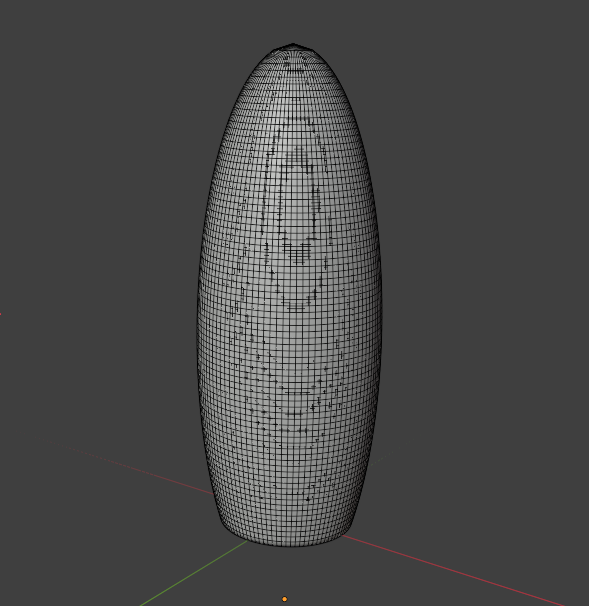
Parametric modelling
Every piece begins as a parametric model, a form defined by relationships, not fixed values. Scale, opening angle, wall thickness, lattice density: all adjustable without rebuilding the mesh.
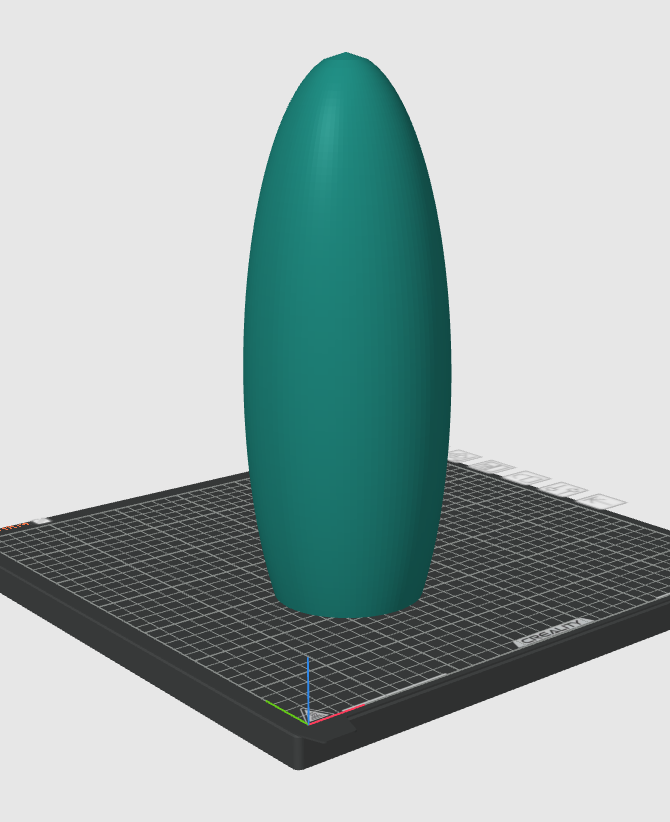
Slicing & optimisation
The model is sliced into toolpaths, 0.2 mm layers, variable infill, strategic support placement. We review every slicer output before it goes to the printer floor.
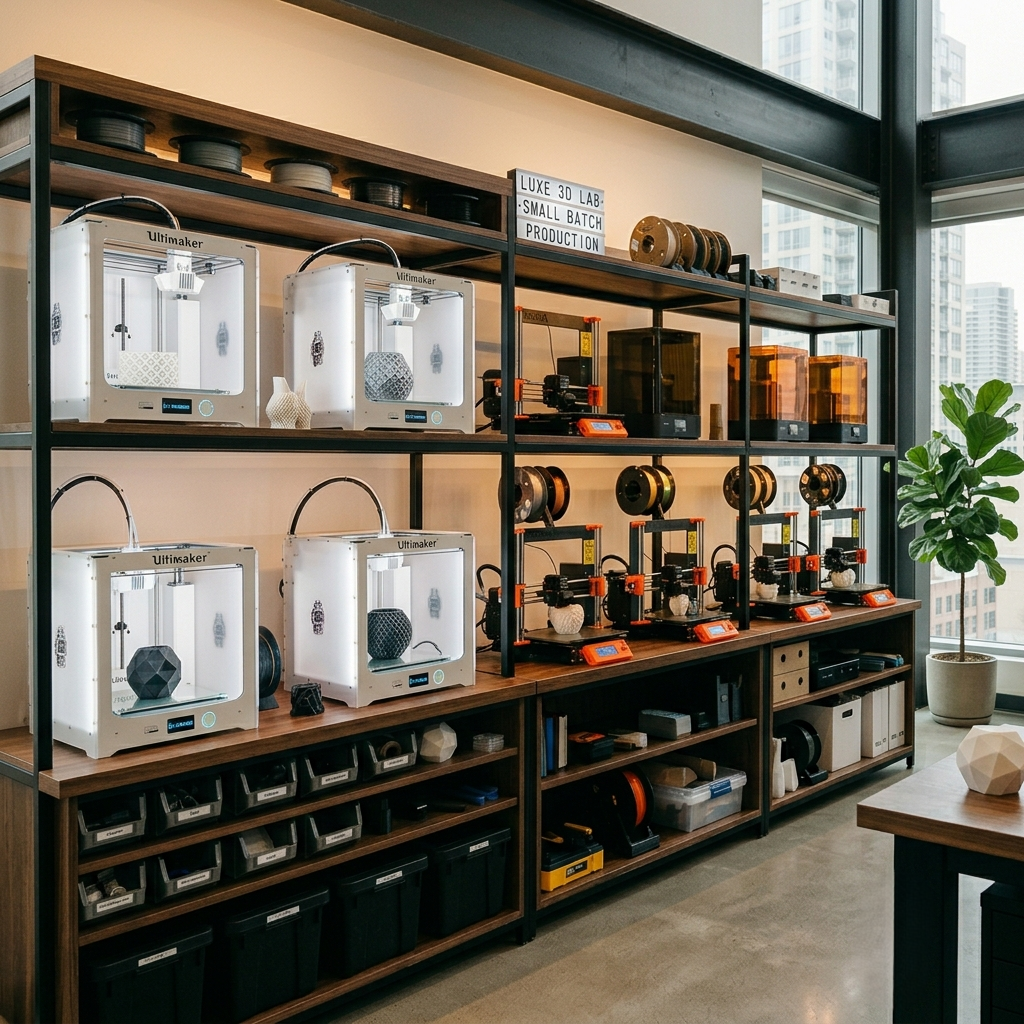
Print farm
Printers across continents, each calibrated daily. Our recycled PLA and bio-composite filaments are stored in sealed humidity-controlled cabinets. A pendant runs for 26–32 hours.
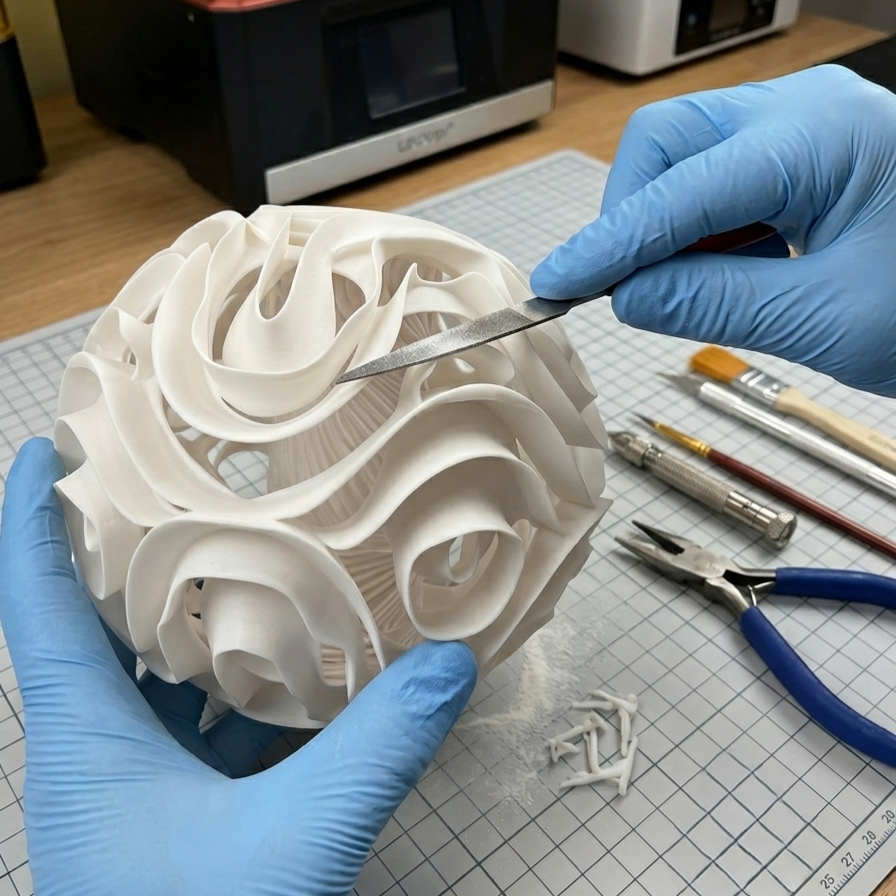
Hand-finishing
Supports are removed, seams are sanded, and each piece is finished by hand. A process that takes roughly the same time as printing itself. No piece moves to electrical assembly without passing quality check.
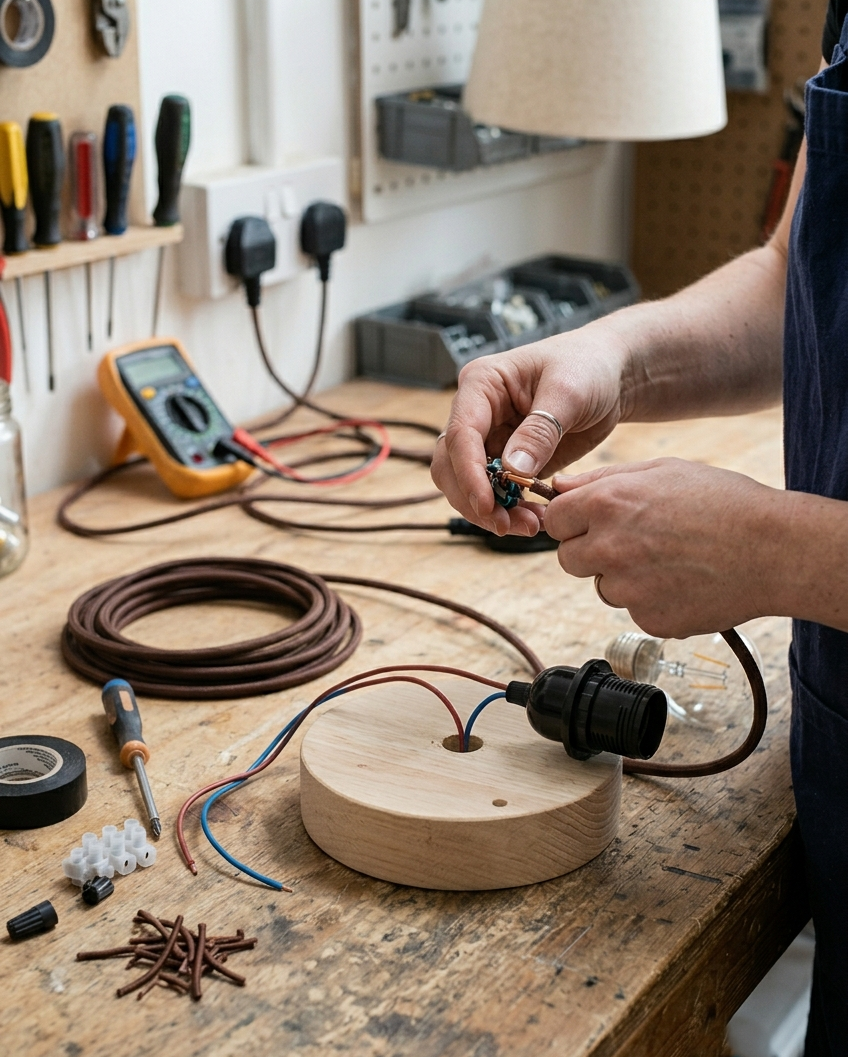
Electrical assembly
All electrical assembly is done in-house. Every piece is functionally tested before it ships.
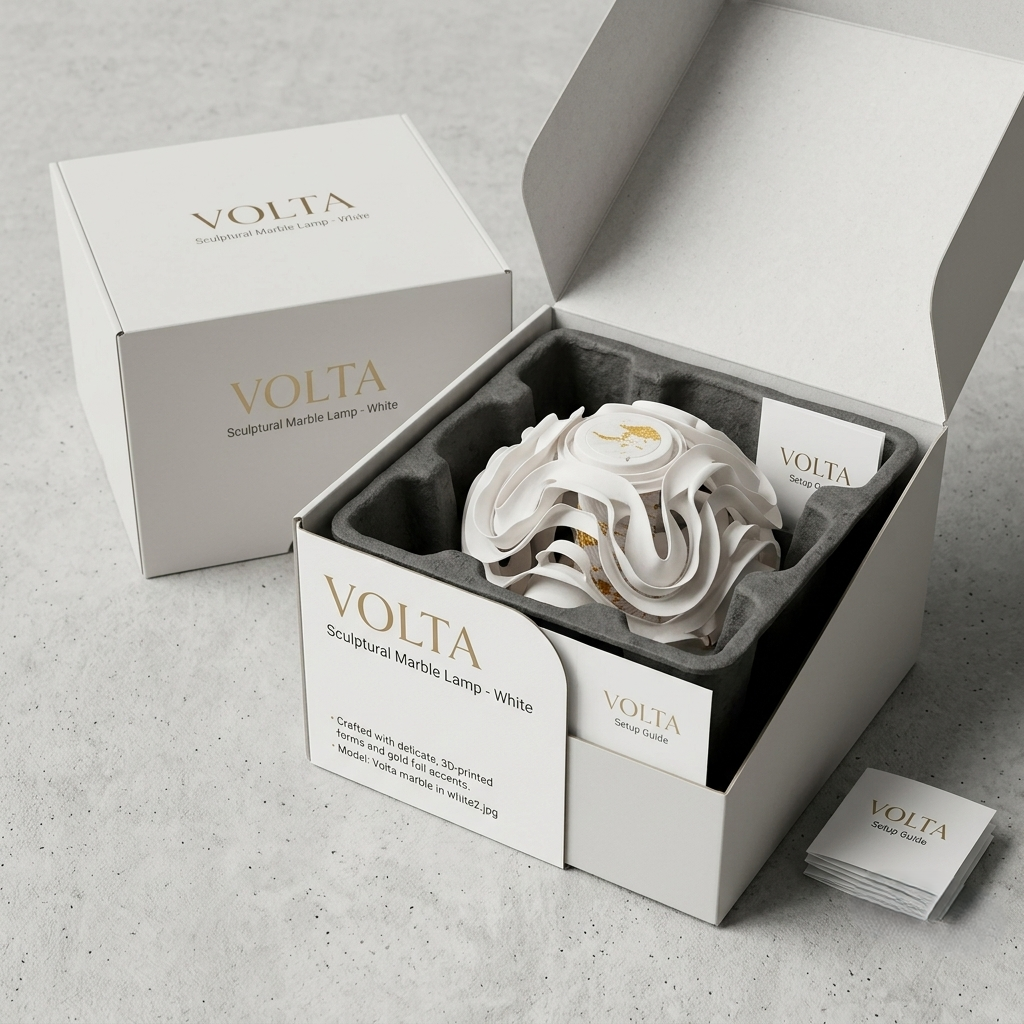
Packaging & shipping
Pieces are cushioned in custom-cut recycled cardboard inserts. No single-use foam. The outer box is over-engineered by design. Shipping is fully insured; customs paperwork is pre-filled by our logistics partner.
Work with us.
Send a brief. We work with clients in 38 countries entirely remotely.